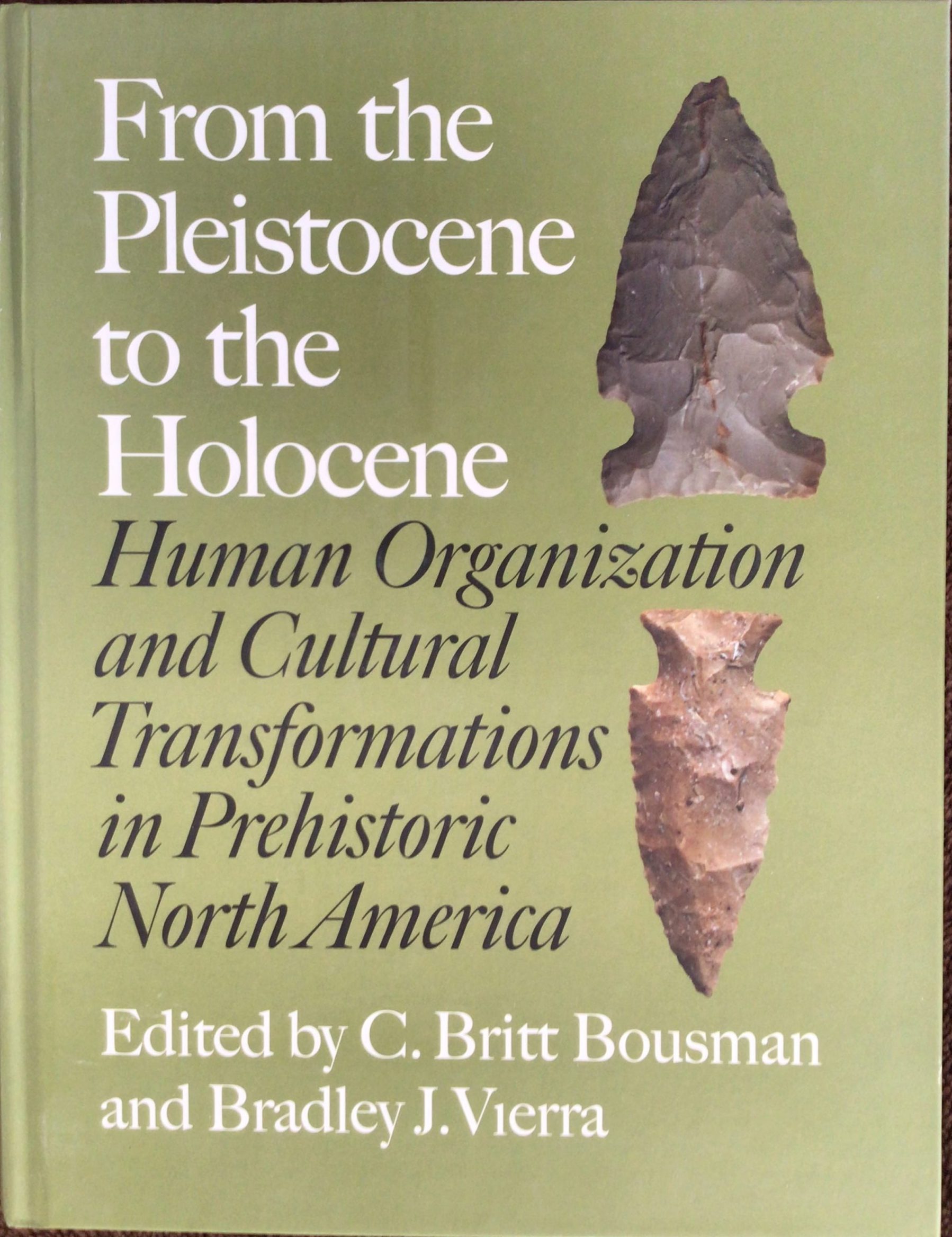
From the Pleistocene to the Holocene: Human Organization and Cultural Transformations in Prehistoric North America
$80.00
1 in stock
Description
Editors: Bousman, C. Britt and Vierra, Bradley J.
Publisher: Texas A & M University Press
Pub Date: 2012
Binding: Hardcover
Condition: Fair. Binding tight. No tears, bends or folds. Without dust jacket, as issued. Printed boards. Previous owner’s name and mark on upper corner title page near spine head. Very light edge and corner wear.
Notes: “The propagation of Holocene Archaic societies from Pleistocene Paleoindian groups is often painted as a simple internal progression from one society to another. For many area of North America…this characterization is a gross oversimplification. It is correctly viewed as the first major cultural shift to take place solely in the Americas, and it sets the stage for unique development in cultural complexity that distinguish later native American prehistoric societies from all others.” (From Chapter 1). In Method and Theory in American Archaeology (University of Chicago Press, 1958), Gordon Willey and Philip Phillips laid out nine differences between Paleoindian and Archaic societies–1)Shift from large animal hunting to using a variety of animals, as well as trapping and hunting; 2)the increase in the use of plants for food; 3) increase in the use of ground stone and other plant processing tools; 4) greater numbers of chipped stone tools; 5) manufacture of different types of projectile points; 6) less mobility, higher residential stability; 7) use of organic materials in tool manufacture; 8) systematic burial of the dead; and 9) intensive use of stone for cooking in ovens. Papers range from Alaska to Mexico to the northeastern United States.
You may also like…
-

Pleistocene Extinctions: Carbon-14 Dates and Early Man in the New World (Pamphlet)
$8.00 Add to cart -

First Farmers: The Origins of Agricultural Societies
$22.00 Add to cart -

The Midland Discovery: A Report on the Pleistocene Human Remains from Midland, Texas
$25.00 Add to cart -

Method and Theory in American Archaeology
$6.00 Add to cart -

Anthropological Papers #121: Newberry Crater: A Ten-Thousand Year Record of Human Occupation and Environmental Change in the Basin-Plateau Borderlands
$15.00 Add to cart -

Late Pleistocene Environments of the Southern High Plains
$20.00 Add to cart -

New Evidence for the Pleistocene Peopling of the Americas
$20.00 Add to cart -

Holocene Vegetation in Chaco Canyon, New Mexico (Pamphlet)
$5.00 Add to cart