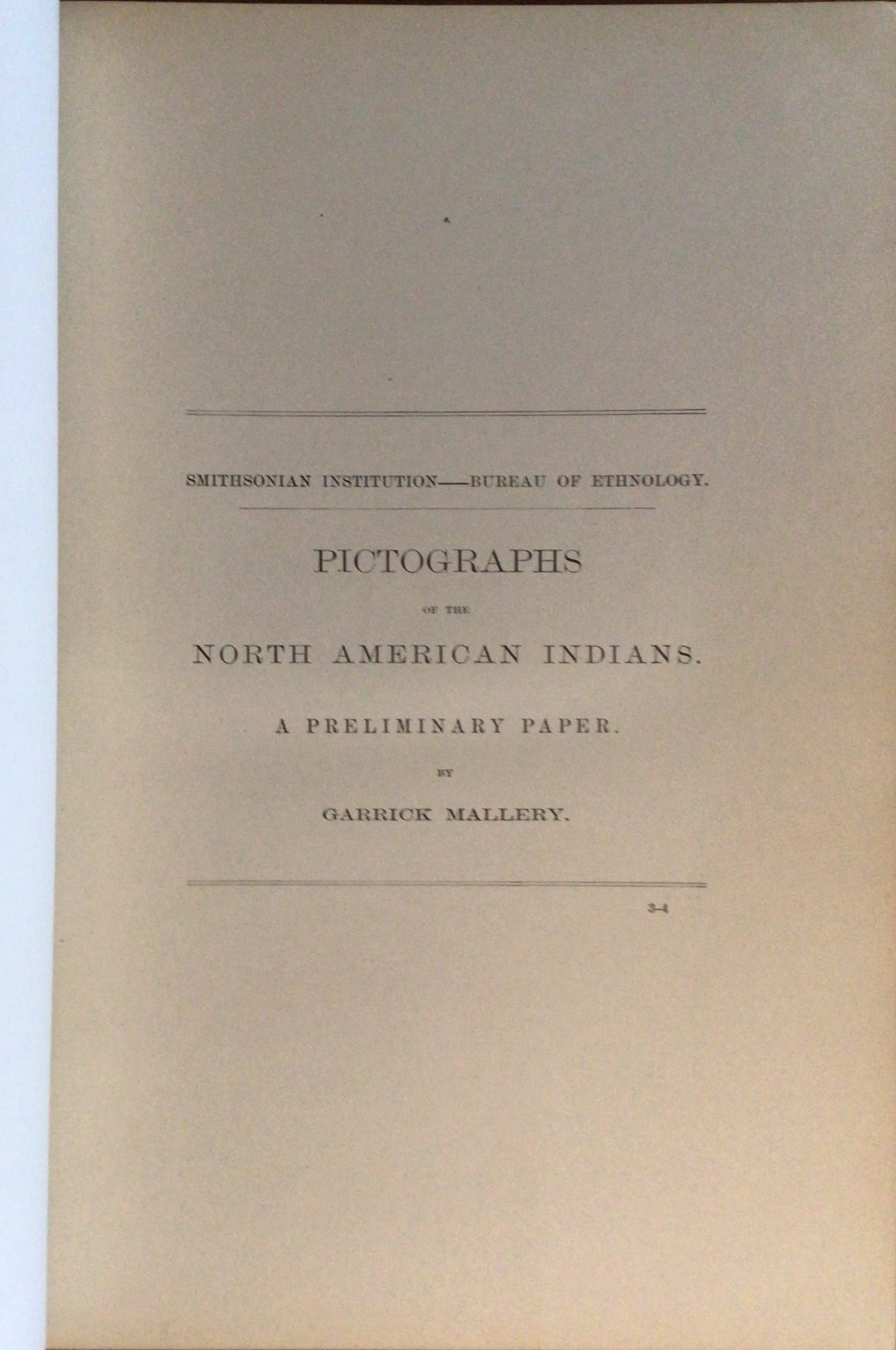

Pictographs of the North American Indians: A Preliminary Paper
$45.00
1 in stock
Description
Author: Mallery, Garrick (1831-1894)
Publisher: Smiithsonian Institution
Pub Date: 1886
Binding: Hardcover
Condition: Fair. Binding tight. No marks, tears, folds. Without dust jacket. This report came from the original BAE Fourth Annual Report of the Bureau of Ethnology (Smithsonian, 1866) that was falling apart. I excised this report and had it rebound in hardcover. The single fault of the original that I can find is a small bump to the lower corner of pages 147-150, near the spine foot. Some foxing to pages (it’s 140 years old). Very light edge and corner wear.
Notes: Distribution of petroglyphs in North America (including Pennsylvania, Ohio, West Virginia and “Southern” states, some Midwest, then most of North America west of the Mississippi). Foreign petroglyphs (Brazil, British Guiana, Peru), objects represented, colors, instruments, pictographs on natural objects (trees, skins, feathers (?!), tattooing, population counts, warnings and guidance, totems, religion, customs. Incredibly complete for its time. Mallery graduated from Yale at 15. received his law degree at 18, and would have had a long, illustrious career as either a lawyer or a soldier had two things not happened–first, being posted to Fort Rice in the Dakota Territory in about 1875 or 1876, and second, being called to Washington by Major John Wesley Powell, to the Bureau of Ethnology, in 1877. During his time at Fort Rice, Mallery became interested in Indian communication by signs and gestures. He foresaw that the Indians’ use of these methods of communication would eventually be lost as they came under white control. His work in this area attracted Powell’s interest, and in 1879, after his retirement from the military, Mallery was appointed as an ethnologist for the BAE.
You may also like…

Related products
-

Popol Vuh: The Definitive Edition of the Mayan Book of the Dawn of Life and the Glories of Gods and Kings
$6.00 Add to cart -

Conservation Archaeology: A Guide for Cultural Resource Management Studies
$7.00 Add to cart -

Mosaic of New Mexico’s Scenery, Rocks and History: A Brief Guide
$8.00 Add to cart -

Fantastic Archaeology: The Wild Side of North American Prehistory
$3.00 Add to cart